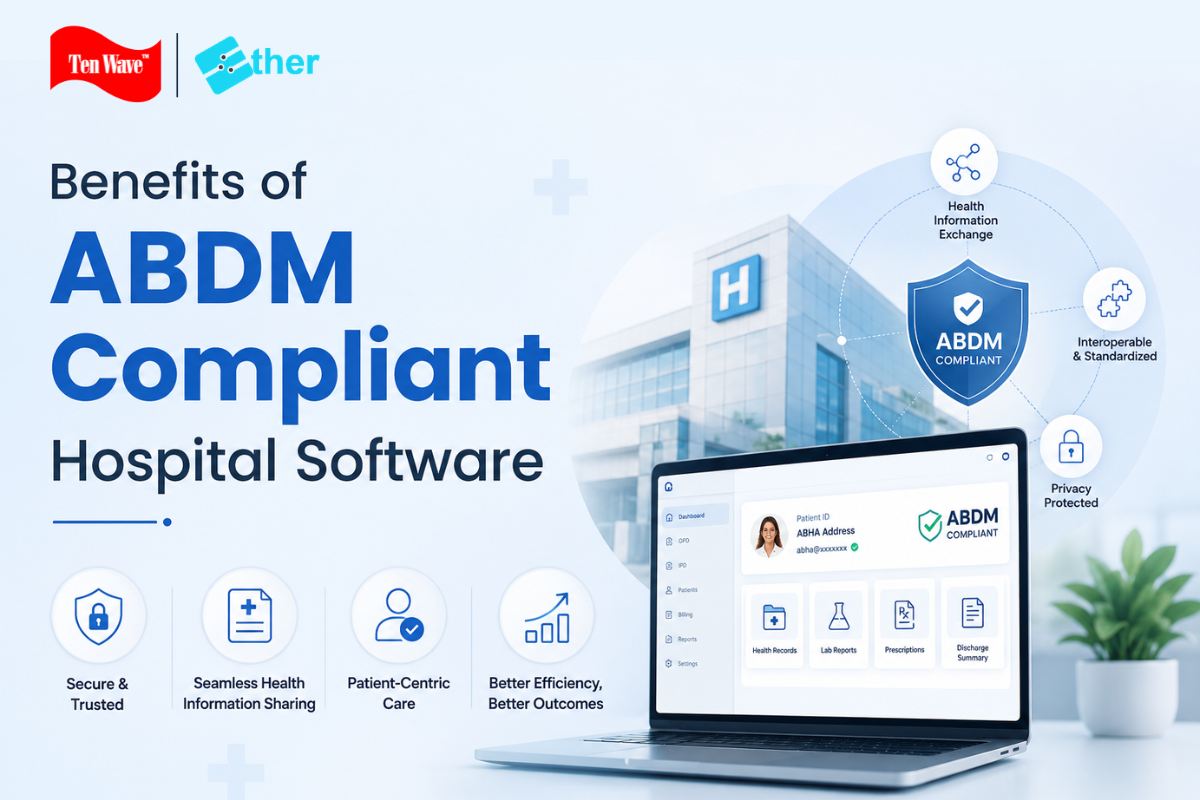

As India's healthcare sector embraces digital transformation, hospitals are expected to deliver faster, safer, and more connected care. One of the key drivers of this transformation is the Ayushman Bharat Digital Mission (ABDM), a government initiative designed to create a unified digital healthcare ecosystem.
To align with these standards, healthcare providers are increasingly adopting ABDM compliant hospital software. This advanced solution enables hospitals to securely manage patient records, streamline operations, and improve collaboration across healthcare systems.
In this guide, we'll explore the major benefits of ABDM compliant hospital software and why it has become essential for hospitals looking to build a future-ready healthcare infrastructure.
What is ABDM Compliant Hospital Software?
ABDM compliant hospital software is a Hospital Management Software (HMS) that follows the guidelines and standards established under the Ayushman Bharat Digital Mission.
It enables healthcare providers to:
- Create and manage digital health records
- Support ABHA integration
- Exchange health information securely
- Improve interoperability between healthcare facilities
- Ensure compliance with India's digital health framework
The software acts as the digital backbone for hospitals, helping deliver efficient, transparent, and patient-centric healthcare services.
Top Benefits of ABDM Compliant Hospital Software
1. Ensures Regulatory Compliance
Compliance with ABDM standards helps hospitals stay aligned with government regulations and national digital healthcare initiatives.
Benefits include:
- Standardized digital health practices
- Reduced compliance risks
- Easier participation in government healthcare programs
- Future-ready infrastructure
Hospitals adopting compliant software are better prepared for evolving healthcare regulations.
2. Secure Data Sharing Across Healthcare Systems
Healthcare often involves multiple providers, specialists, laboratories, and diagnostic centers.
ABDM compliant software enables:
- Secure exchange of patient information
- Faster referrals
- Better care coordination
- Reduced duplication of records
This ensures that healthcare professionals always have access to accurate and updated patient information.
3. Improved Interoperability
One of the biggest challenges in healthcare is disconnected systems.
ABDM compliant hospital software bridges this gap by enabling seamless communication between:
- Hospitals
- Clinics
- Diagnostic Labs
- Pharmacies
- Healthcare professionals
Improved interoperability leads to faster diagnosis, better treatment decisions, and enhanced patient experiences.
4. Enhanced Patient Data Security
Patient privacy is critical in digital healthcare.
ABDM compliant software offers advanced security features such as:
- End-to-end encryption
- Role-based access control
- Secure authentication
- Data privacy compliance
- Audit trails
These features help protect sensitive health records from unauthorized access and cyber threats.
5. Better Patient Care
When doctors have instant access to complete medical records, they can make informed clinical decisions more quickly.
This leads to:
- Faster diagnosis
- Personalized treatment plans
- Reduced medical errors
- Improved patient satisfaction
- Better health outcomes
A connected healthcare ecosystem ultimately benefits both patients and providers.
6. Increased Operational Efficiency
Manual administrative tasks consume valuable time and resources.
ABDM compliant software automates:
- Patient registration
- Appointment scheduling
- Billing
- Pharmacy management
- Laboratory workflows
- Electronic Medical Records (EMR)
- Reporting
Automation reduces paperwork, minimizes errors, and improves overall hospital productivity.
7. Real-Time Analytics and Smart Decision-Making
Modern hospitals rely on data to improve efficiency.
With integrated dashboards and reporting tools, administrators can:
- Monitor hospital performance
- Track patient trends
- Optimize resource allocation
- Improve financial management
- Support strategic planning
Real-time insights enable hospitals to make data-driven decisions.
8. Scalable and Future-Ready Technology
Healthcare technology continues to evolve.
ABDM compliant hospital software is designed to support future innovations, making it easy to:
- Add new modules
- Expand hospital operations
- Integrate emerging healthcare technologies
- Meet future compliance requirements
This ensures long-term value for healthcare organizations.
9. Patient Empowerment Through Digital Access
Modern patients expect convenient access to their healthcare information.
ABDM compliant software enables patients to:
- Access digital health records
- Manage ABHA-linked information
- View medical history
- Share records securely with healthcare providers
This encourages greater patient engagement and continuity of care.
Why Hospitals Should Adopt ABDM Compliant Software
Healthcare is becoming increasingly connected, data-driven, and patient-focused.
Hospitals that implement ABDM compliant software can:
- Improve operational efficiency
- Enhance patient trust
- Strengthen data security
- Ensure regulatory compliance
- Deliver higher-quality healthcare
- Support India's digital healthcare mission
Adopting an ABDM-ready Hospital Management System is no longer just a technological upgrade—it's a strategic investment in the future of healthcare.
Conclusion
As India's healthcare ecosystem continues its digital transformation, ABDM compliant hospital software has become an essential solution for hospitals of all sizes.
From secure data sharing and interoperability to operational efficiency and better patient outcomes, the benefits extend across every department. By investing in ABDM compliant technology today, hospitals can stay compliant, improve care delivery, and build a smarter, more connected healthcare system.
Whether you're upgrading your existing Hospital Management System or implementing a new digital solution, choosing an ABDM compliant hospital software platform will help your organization remain competitive and future-ready.
Frequently Asked Questions (FAQs)
Q1. What is ABDM compliant hospital software?
ABDM compliant hospital software is a Hospital Management System that follows the standards of the Ayushman Bharat Digital Mission, enabling secure digital health record management, interoperability, and compliance with India's digital healthcare ecosystem.
Q2. Why is ABDM compliance important for hospitals?
ABDM compliance helps hospitals securely exchange health information, improve patient care, streamline operations, and meet national digital healthcare standards.
Q3. How does ABDM compliant software improve patient care?
It provides healthcare professionals with quick access to complete patient records, enabling faster diagnoses, informed treatment decisions, and better care coordination.
Q4. Is ABDM compliant software secure?
Yes. It includes advanced security features such as encryption, role-based access control, secure authentication, and audit logs to protect sensitive patient information.
Q5. Can small hospitals implement ABDM compliant hospital software?
Absolutely. ABDM compliant solutions are scalable and can be implemented by small clinics, multispecialty hospitals, diagnostic centers, and large healthcare organizations.
Tenwave Infotech - Best Healthcare IT company in India. We provide top Healthcare Software Solutions to improve healthcare industries. We are dedicated to transforming the healthcare management system with our healthcare IT services. Contact us Today!
How Can We Help you?